What did CTI observe when testing RadioPro Link over Starlink Mini?
Last updated:
CTI field testing · September 2026
Reported measurements
Explore RadioPro Link over Starlink
Compare the reported client-to-Gateway timing across stationary, highway, in-town and wired-reference conditions. Select a bar to inspect that test.
Values are typical milliseconds reported in CTI’s announcement. Every comparison starts at zero; the scale changes from 40 ms to 80 ms when switching to round trip.
010203040 ms
Starlink · stationary
32 msTypical one-way delay
64 msTypical round trip
NoneObserved outage time
No outages were observed in this stationary test. This does not establish a long-term uptime percentage.
Connection path shown schematically. These figures end at the Gateway; they exclude the control-station and RF audio path.
What was tested?
Starlink Mini on the Roam plan, stationary and in motion, with a RadioPro client using wired office internet. The wired Gateway reference also used RadioPro Link.
The original announcement reports aggregate timing and interruption observations. The table in the written answer below provides all four conditions together.
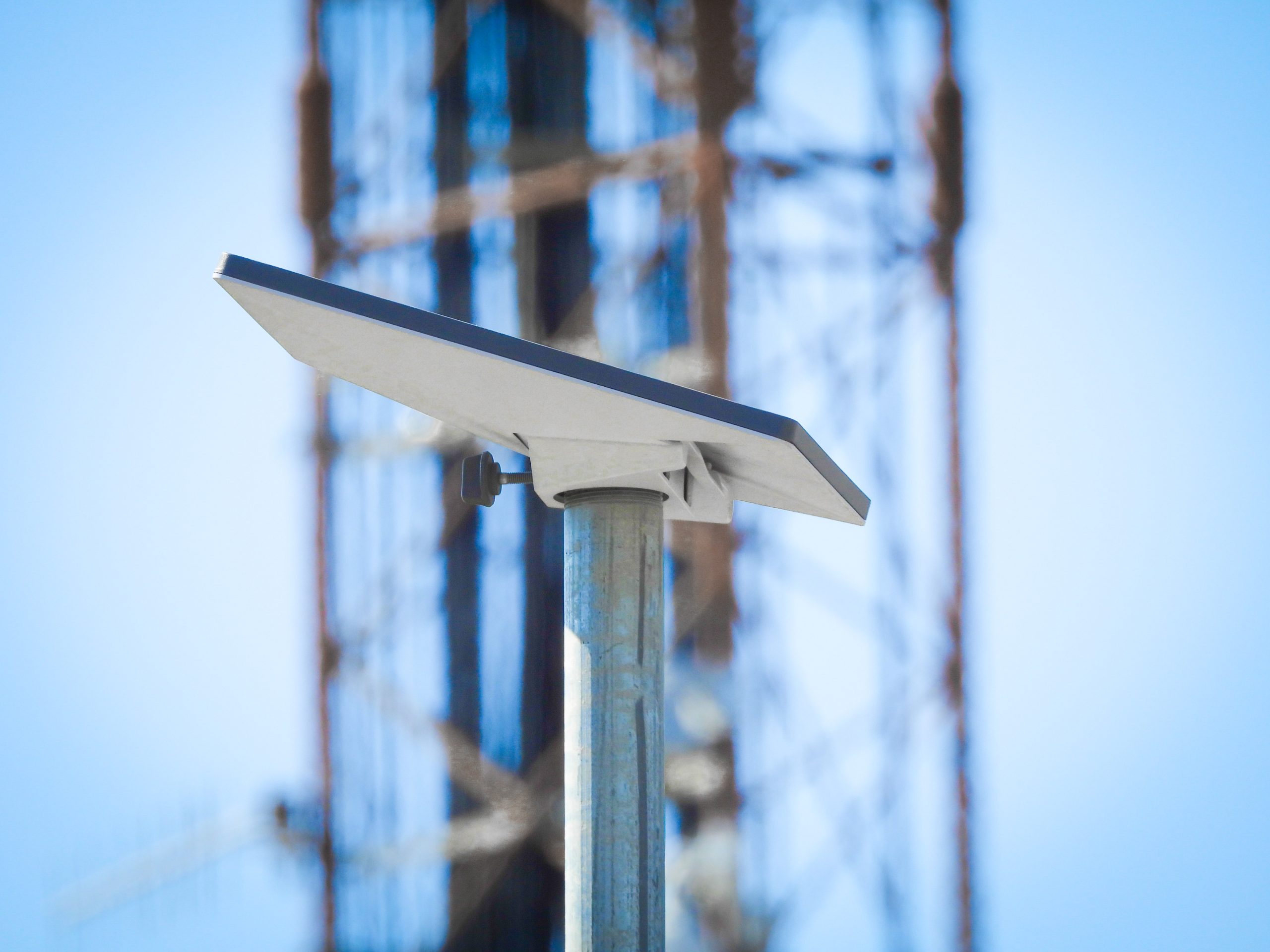
Radio-site image supplied in CTI’s RadioPro Link announcement.
Network-path timing is one part of the audio journey. These figures are not complete microphone-to-field-radio-speaker delay. Radio call setup, processing and the RF path add other factors.
Source, outage interpretation and comparison limits
Source: CTI Products News, “Starlink and CGNAT Support is Here!”, October 29, 2026, describing September 2026 field tests.
“None observed” describes the reported test, not a measured long-term uptime of 100%. In-town outages occupied 1.4% of that test time and were described as roughly 5–10 seconds each; the connection recovered each time. There is no time-by-time interruption plot because the supplied announcement does not provide a timestamped event log.
The wired reference is a different internet access circuit. Its comparison with Starlink does not isolate a fixed amount of overhead caused by Link. Typical one-way and round-trip figures are reported separately, including the 24 ms / 49 ms wired reference.
Dish obstructions, local conditions, service load, network policy and configuration can change results. These observations are not an uptime commitment or a guarantee for another site. Confirm provisioning and supported versions with CTI.
Reported field results from CTI’s announcement. The written answer preserves the complete comparison table and its qualifications.
CTI tested RadioPro Link using Starlink Mini on the Roam plan in September 2026, both stationary and in motion. The announcement reports the following client-to-Gateway timing results through Link, using a client on wired office internet.
Reported field-test results, September 2026
Condition
Typical one-way delay
Typical round trip
Observed outage time
Starlink, stationary
32 ms
64 ms
None observed
Starlink, highway motion
32 ms
64 ms
None observed
Starlink, town motion
34 ms
68 ms
1.4% of test time
Wired Gateway reference, also through Link
24 ms
49 ms
None observed
These figures describe the article's client-to-Gateway path, not the complete microphone-to-field-radio-speaker delay. Radio call setup, audio processing and the RF path are additional factors. The comparison also uses different access circuits, so it does not isolate a universal fixed latency added by Link.
The in-town outages were reported as roughly 5–10 seconds each, most likely associated with dish obstructions from buildings and trees; the Link connection recovered each time. Dish placement, local conditions, service availability and traffic load can change results.
The announcement also describes basic Dispatch testing over Verizon 4G LTE MiFi, but not moving/weak-signal or maximum-client tests on that setup. Test the intended site and workload rather than treating these samples as an uptime or performance guarantee.